Basin
- Year
- 2025
- Phenomenon
- Heartbeat, biofeedback
- Type
- Interactive sculpture
- Links
- Original Fab Academy documentation ↗
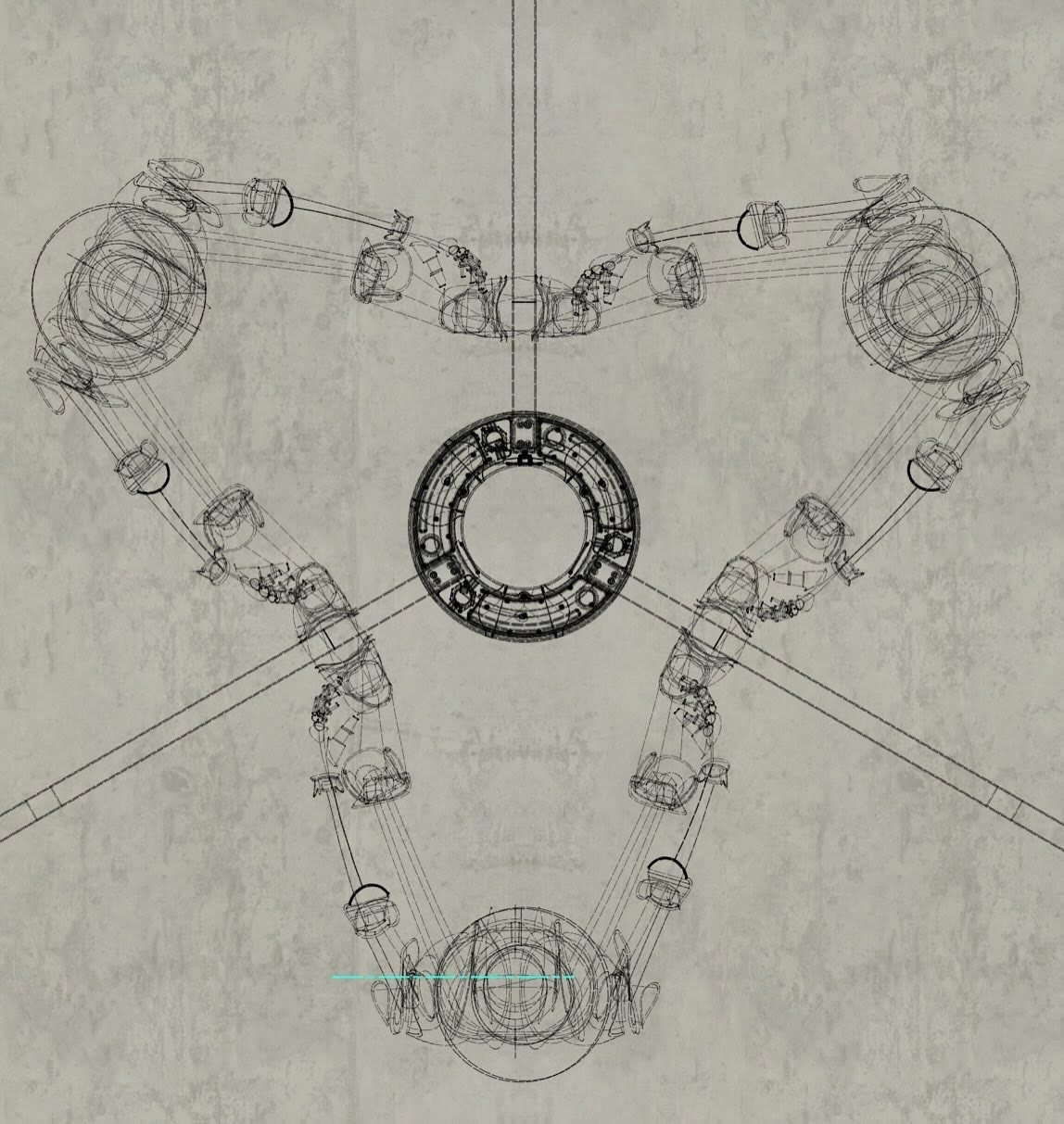
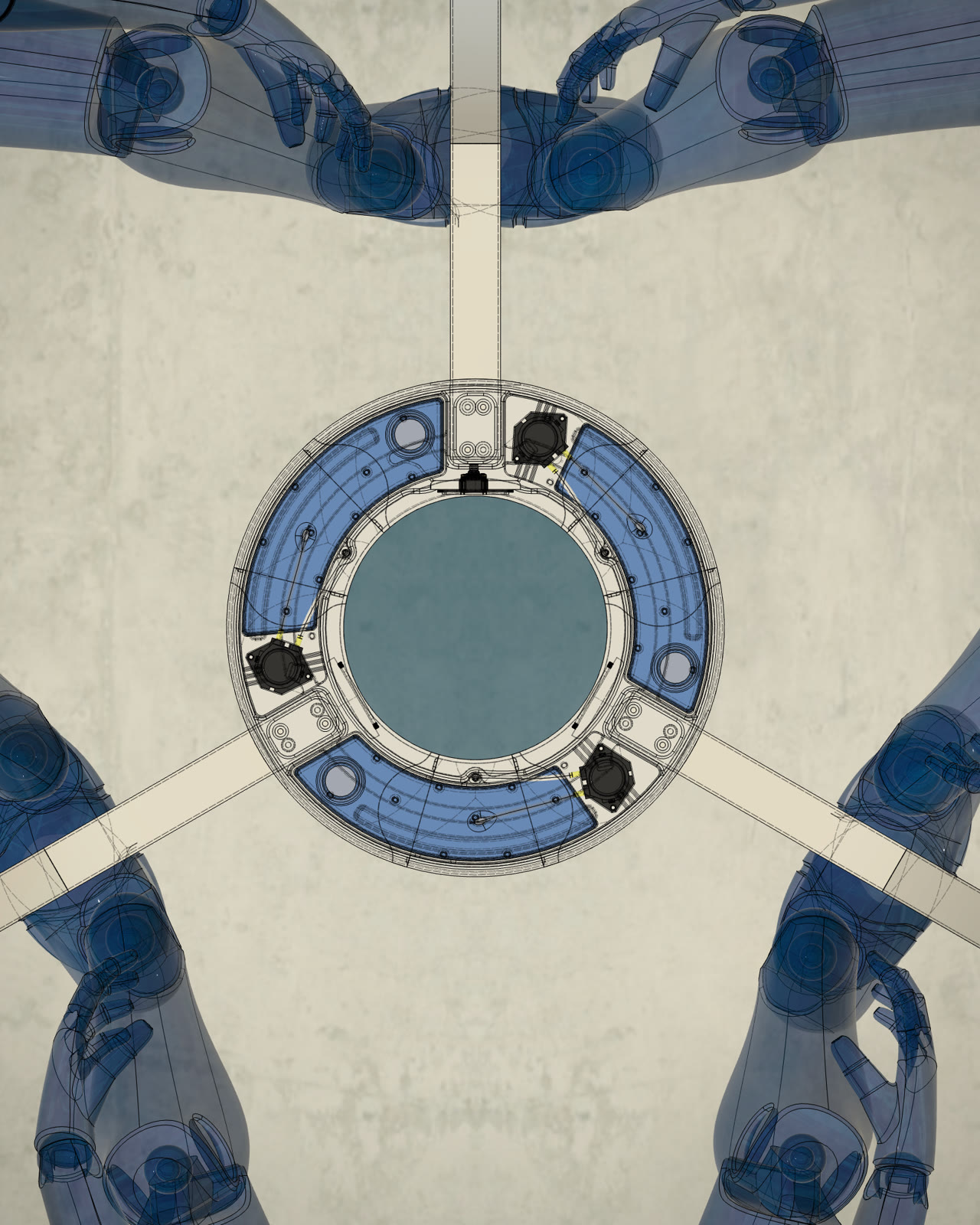
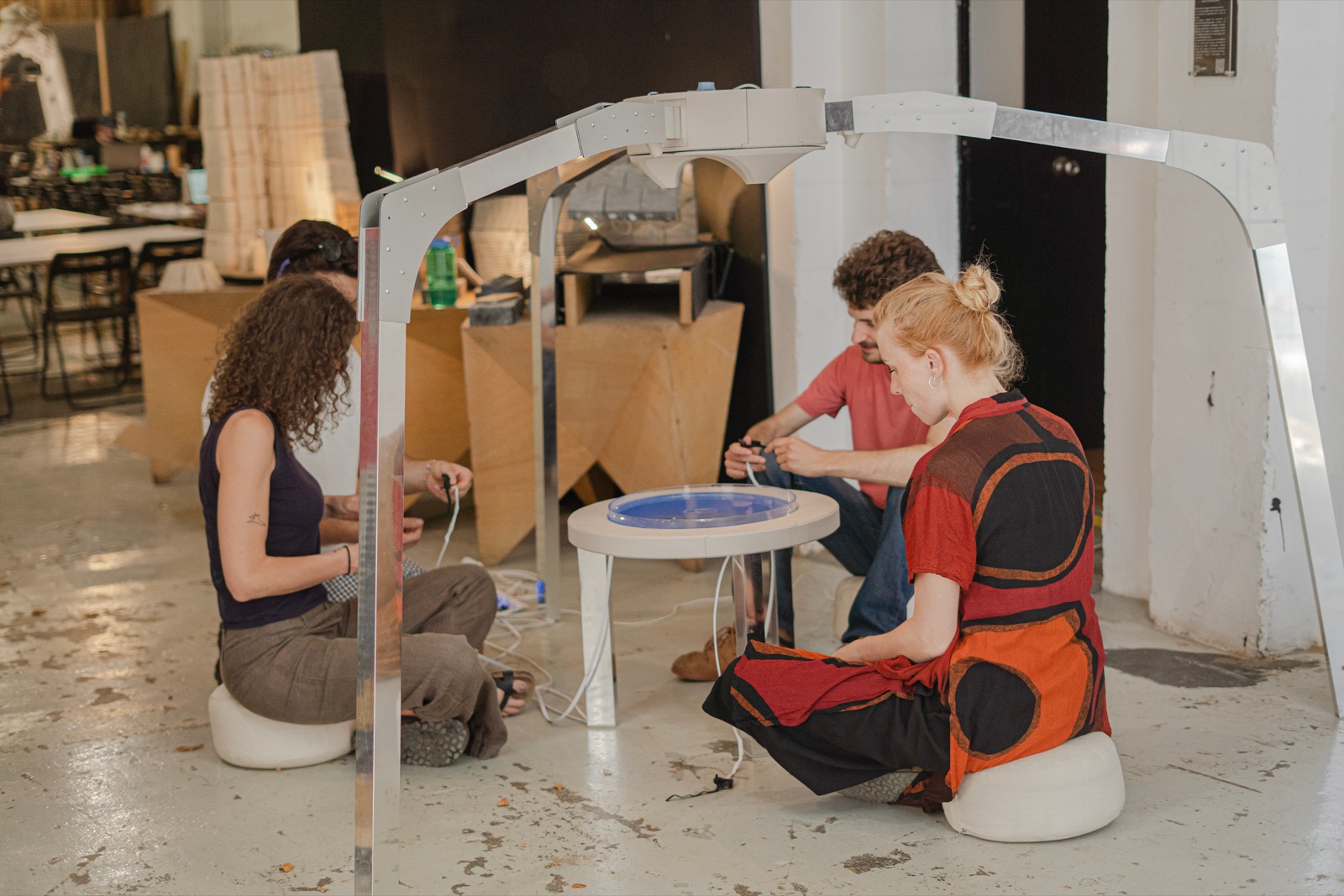
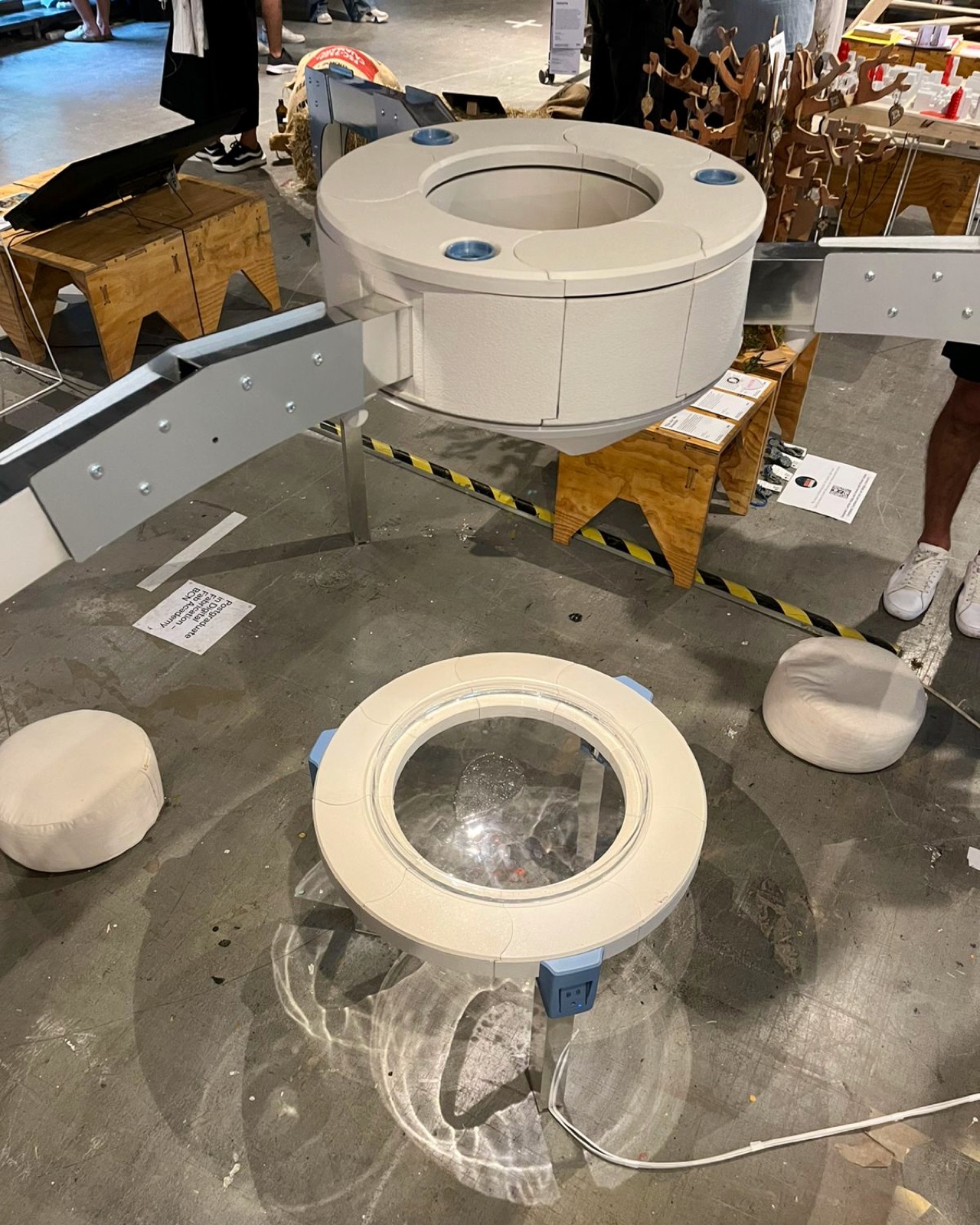
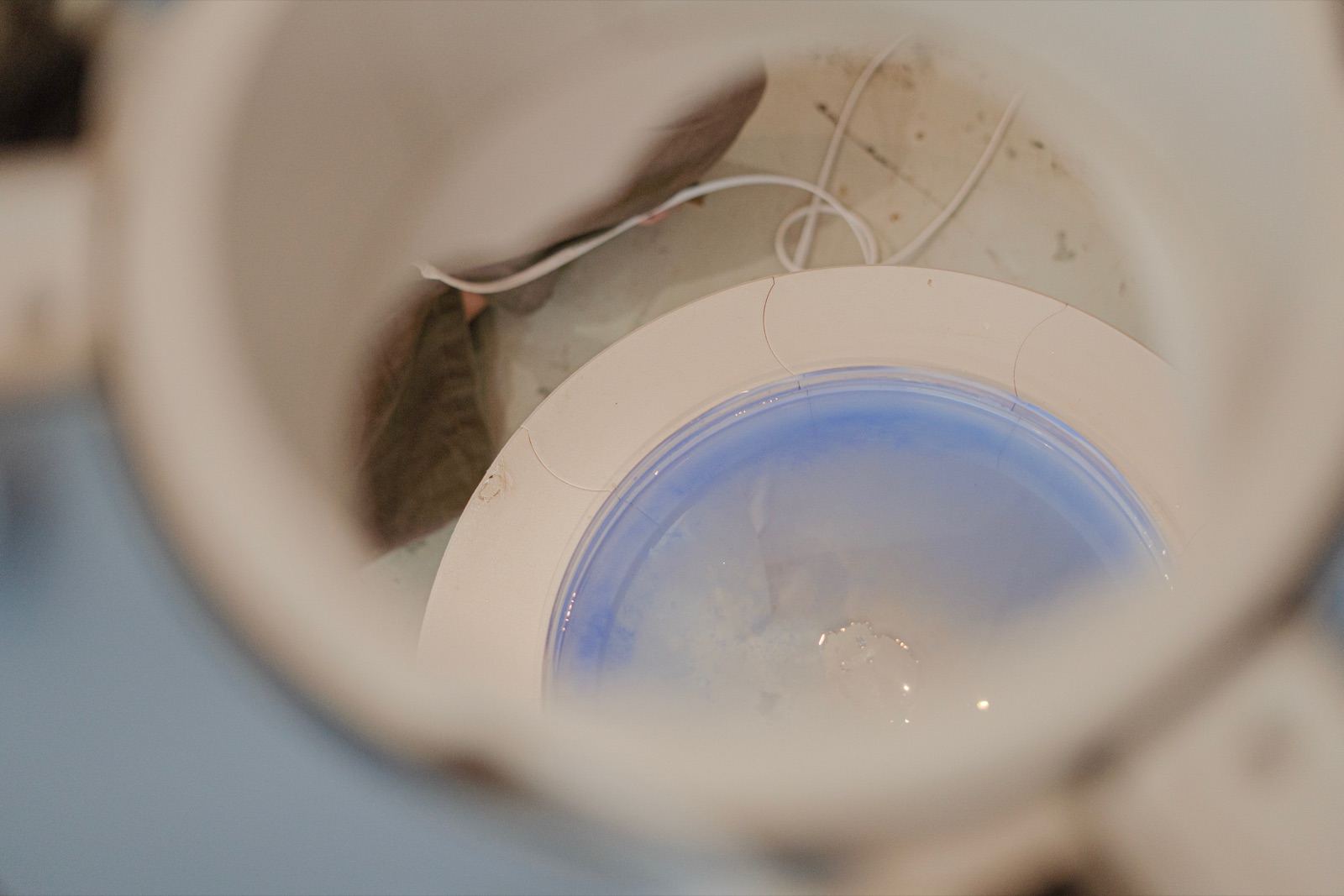
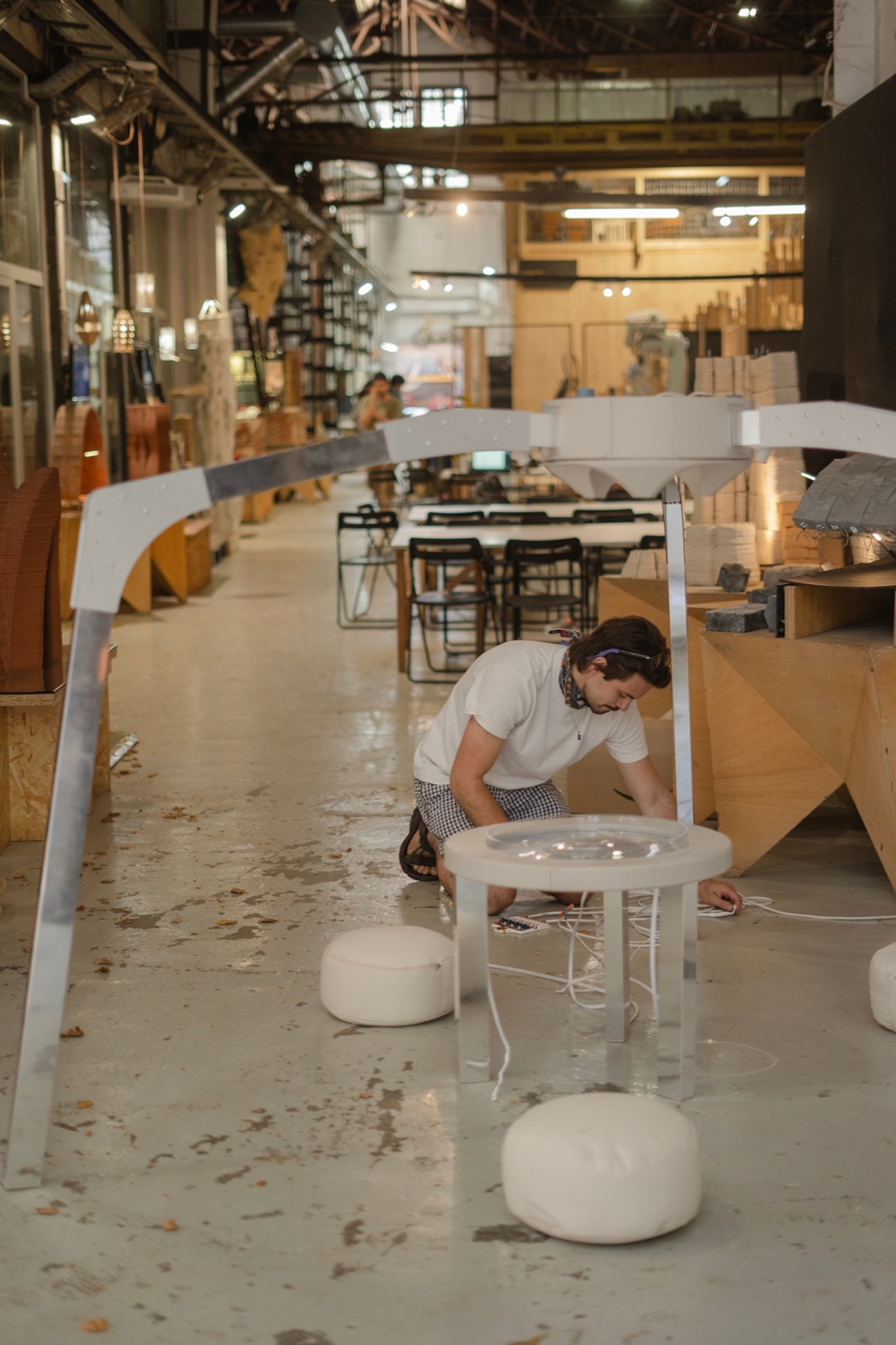
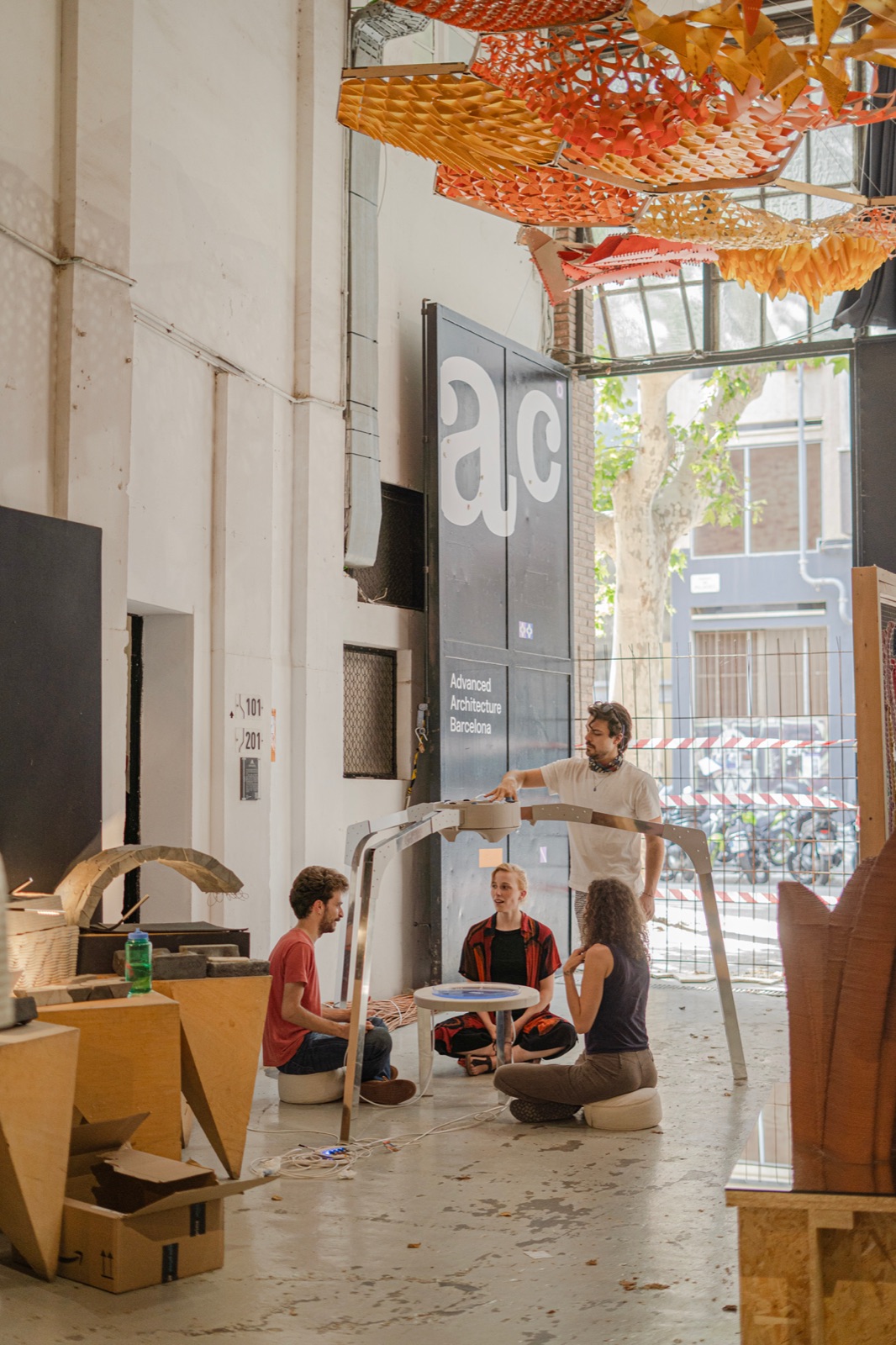
Basin is a work for communal meditation. Three participants sit around a glass dish, and a droplet of water falls at the rate of each person’s heartbeat, so as their heart rate changes, the rhythm of their droplets changes with it. The droplets act as a kind of visual mantra: a point of focus that draws attention inward, toward interoception, the sense of the body’s own internal state.
It is meant as a counterpoint to the design of popular social media, which captures and steers our attention and often leaves us feeling restless, disembodied and disempowered. Rather than add to the criticism of those platforms, Basin offers an alternative: an example of how attention technologies could instead reconnect us to our deeper selves, our physical bodies and each other.
Visual language
The work needed to draw attention to its two primary elements: the dish at its center and the caustic shadows it casts. The forms are meant to be confident but quiet, mixing defined lines and flat planes with organic curves, in a limited palette. Three works shaped it: Lily Clark’s Objects for a Heavenly Cave, for its proportion and subtlety; Seop Peoseo’s Passage to the Lake, a refined piece built around a similar peristaltic-pump mechanism; and Benjamin Langholz’s Stone 27, for staying visually focused while inviting participation.
How it works
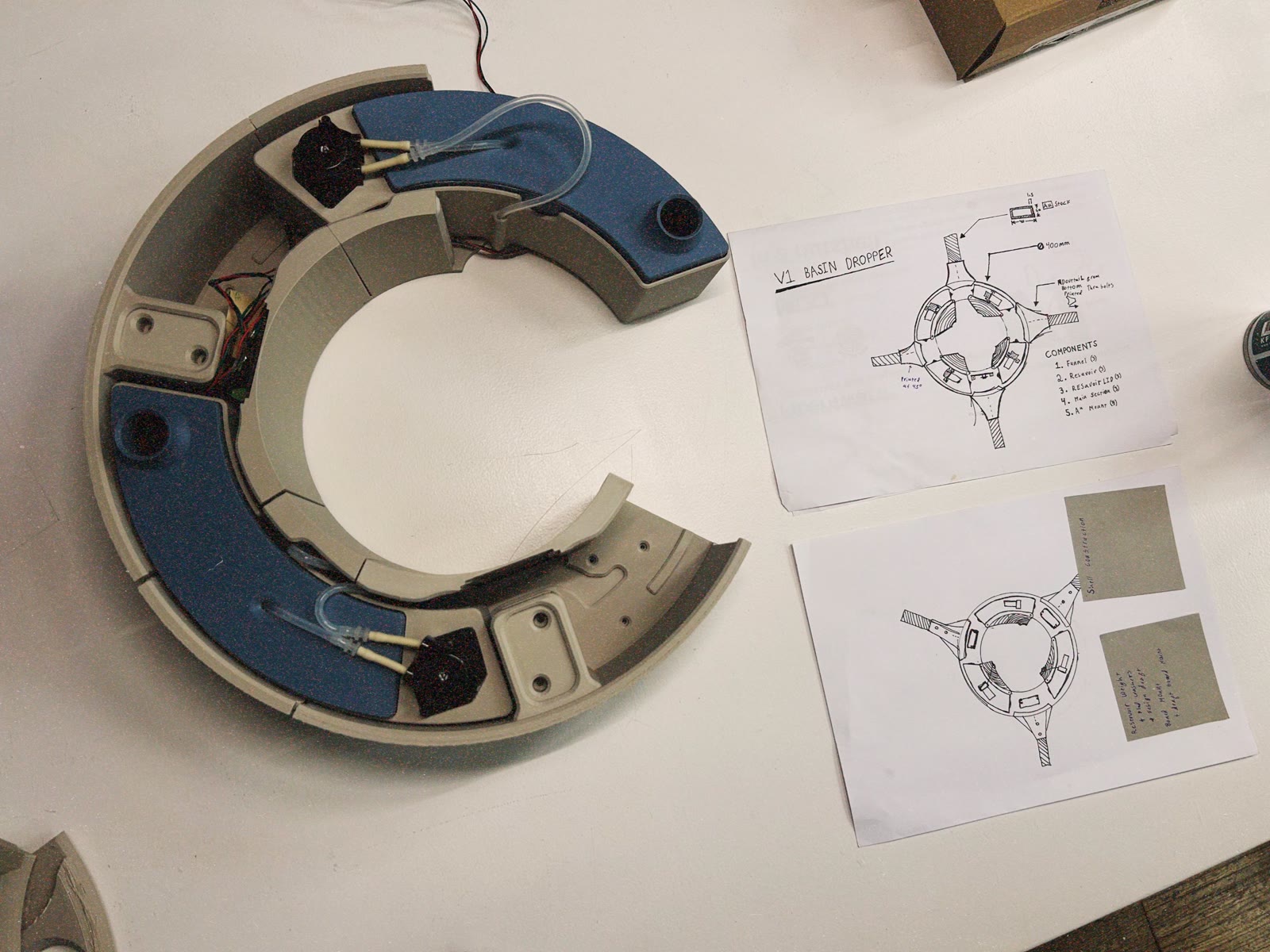
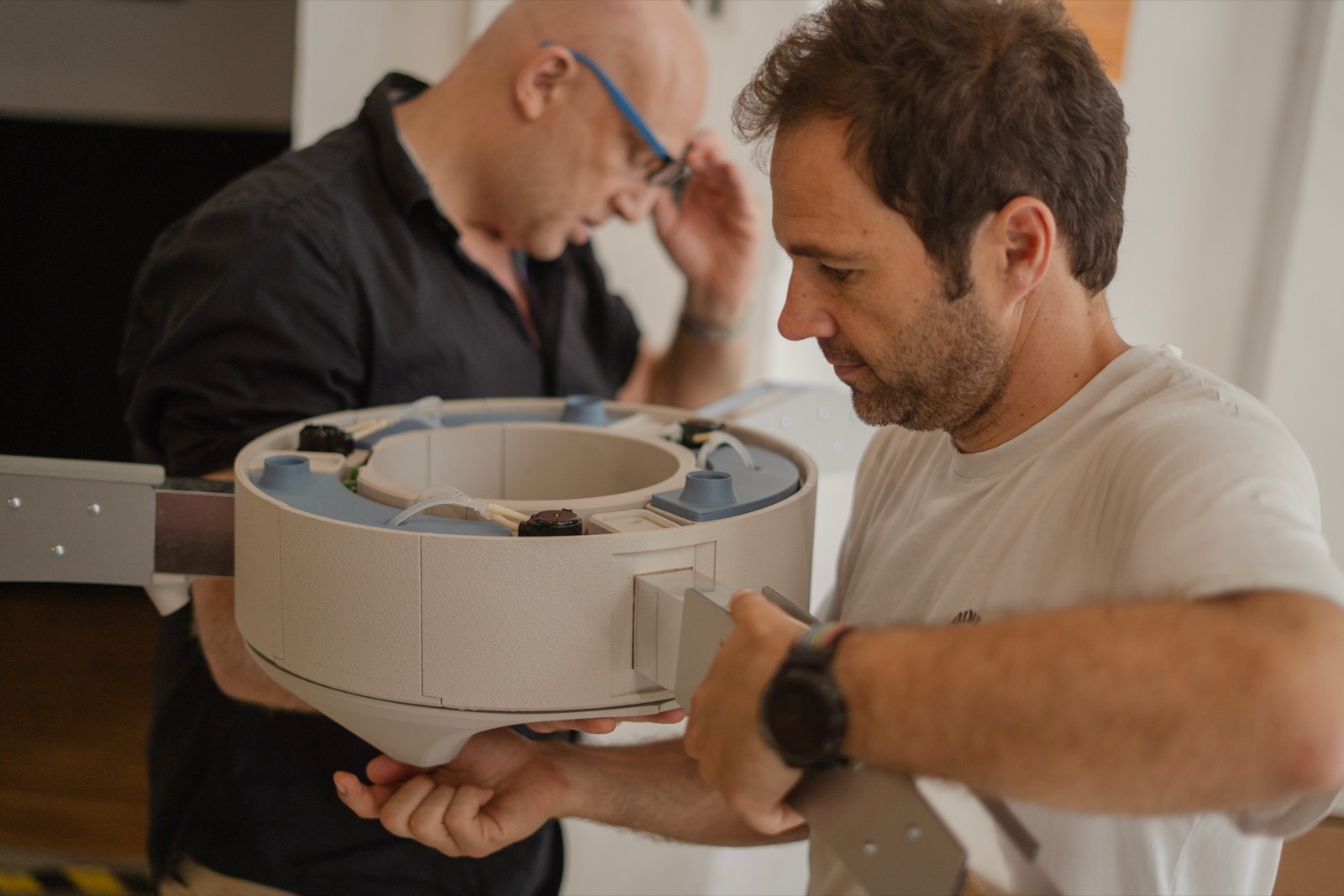
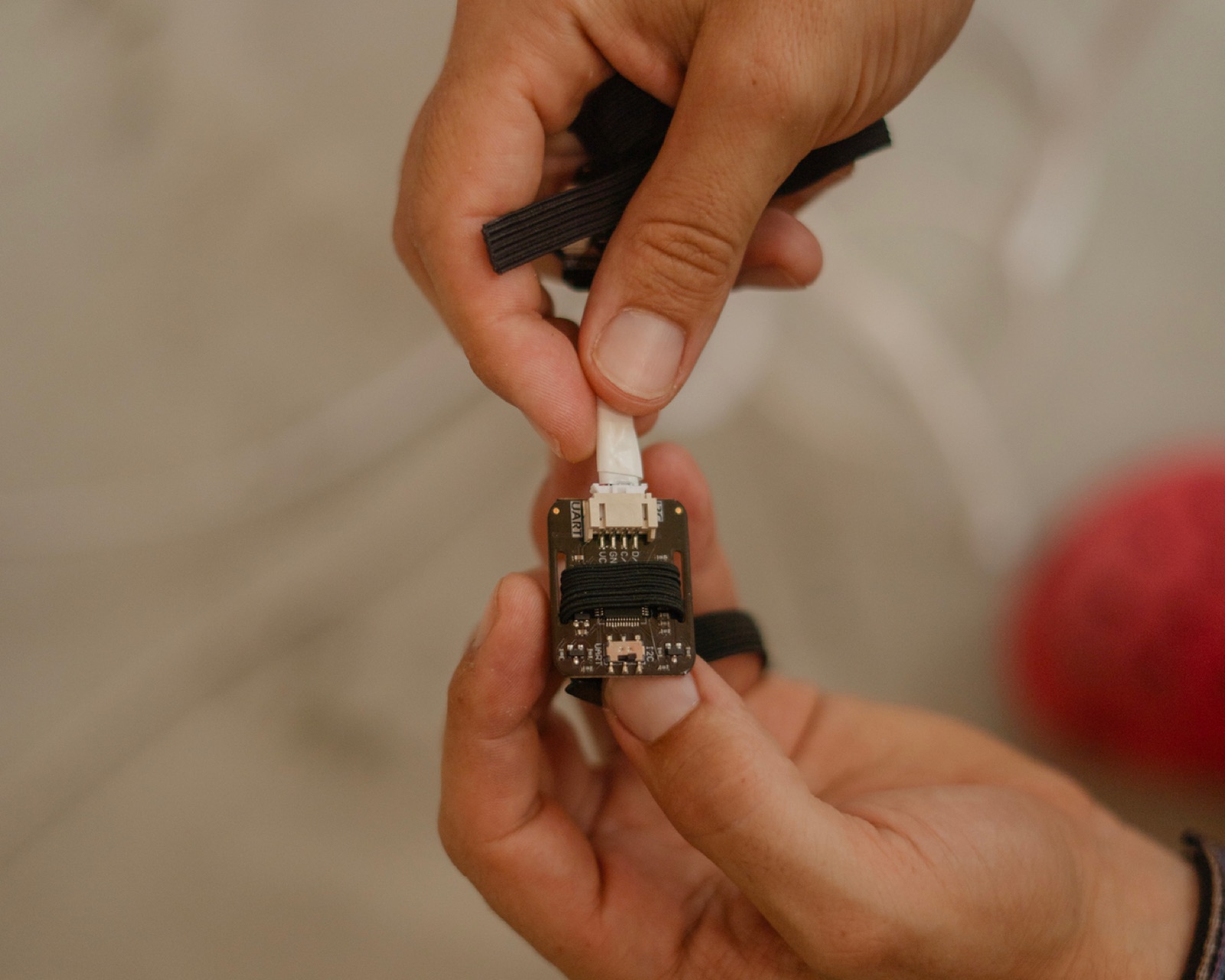
The first version read pulses with three MAX30102 PPG sensors. The final version used three Seeed Studio XIAO 60GHz MR60BHA2 millimeter-wave sensors, which read heartbeat from up to 1.5 m away without contact. Two Seeed Studio XIAO ESP32-C3 boards, a sender below and a receiver above, communicate over UART. The sender smooths each reading with a rolling average, and the receiver converts each heart rate into a pulse rate for that participant’s pump. Each participant has their own dropper fed by a DFRobot peristaltic pump, three in all, which responds to the incoming heart-rate data; it was chosen over an I2C pump that cost about four times as much. Reliability was the main concern throughout, so I deliberately used proven off-the-shelf boards for power conversion, USB-C power delivery and the microcontrollers.
Fabrication
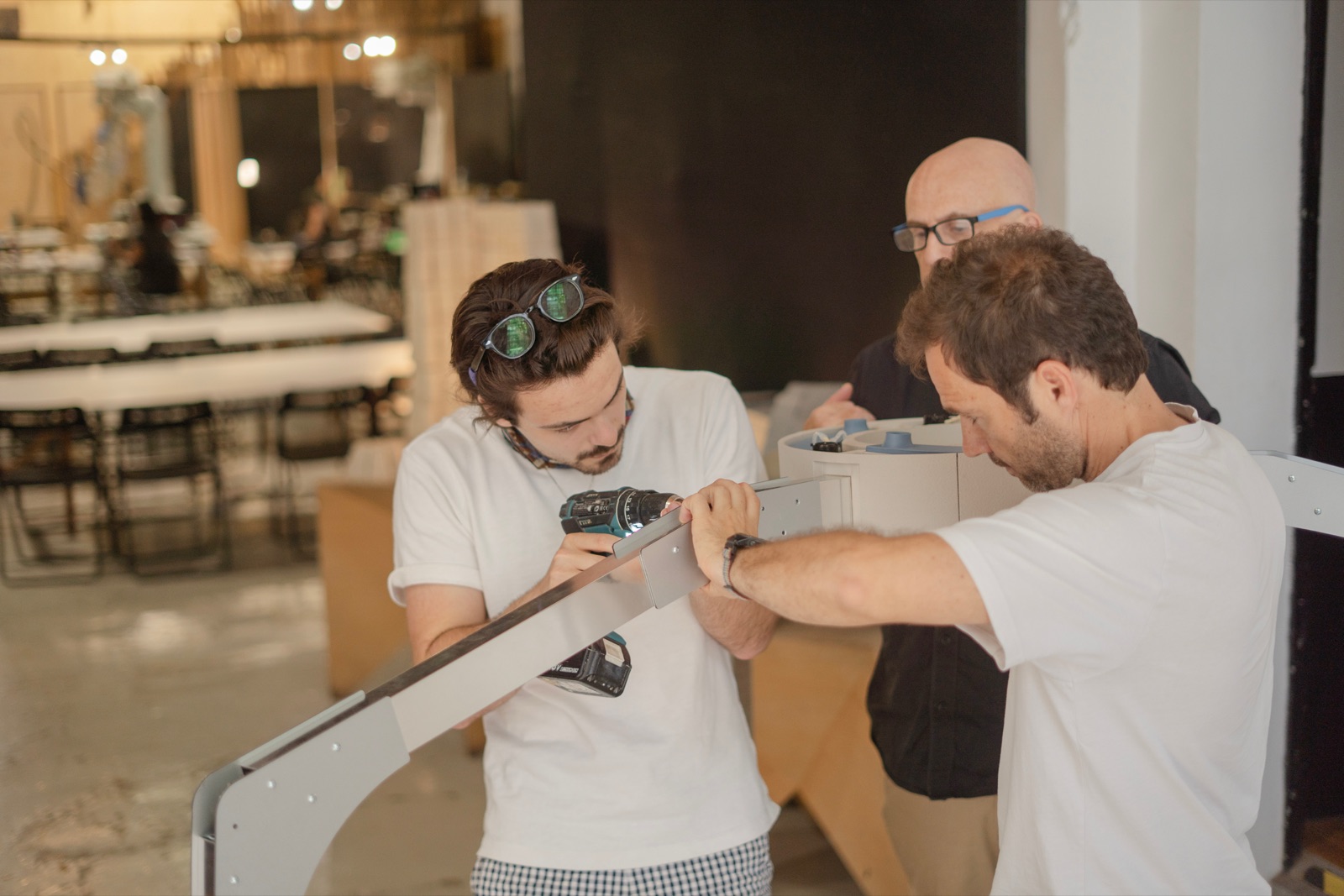
The frame is aluminum extrusion; the housings are 3D printed in matte PLA and stiffened with CNC-cut 4 mm Dibond plates; the basin is a 400 mm glass dish. The circuit boards were deliberately modular: the upper and lower boards are the same design with the same components, each using only the features it needs, so a single board served both and sped up development. They were designed in flux.ai, milled as a double-sided test board, then ordered for production.
What I learned
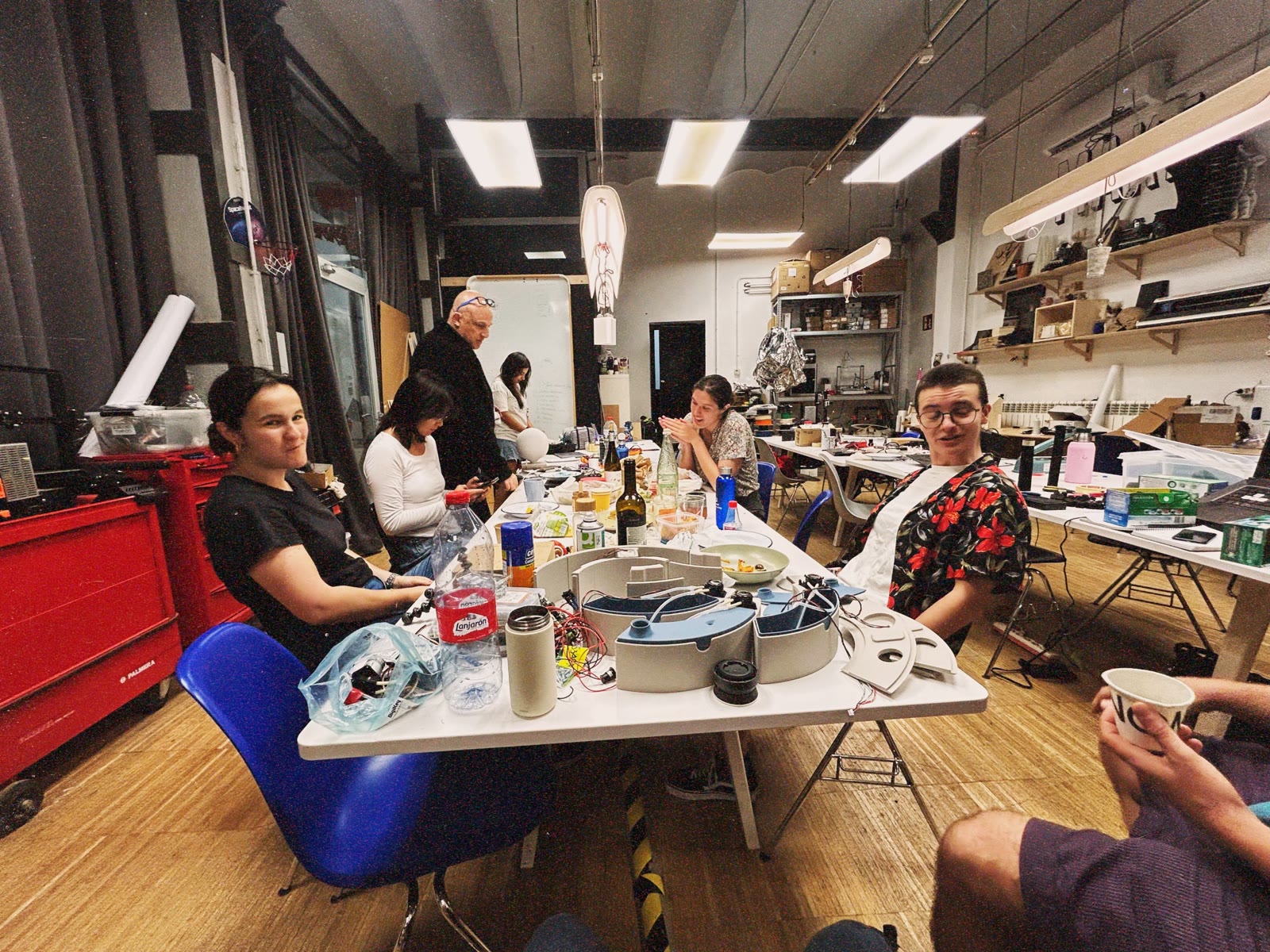
I developed the code with AI coding assistants, spending full days writing a detailed specification for each part of the code. Each part was developed and verified on its own, and I only integrated the whole once every part had proven itself, which made the final two-day integration manageable. Testing hardware apart from software also made faults easier to isolate. After sections were reprinted and glued in the wrong order, I added a printed part-ID system.
The lead photograph shows an early version of Basin that sensed heartbeats with PPG (optical pulse) sensors; these were replaced with millimeter-wave sensors before the work was first exhibited.